Pluck
Mariners' Museum, Uncurated Search Results
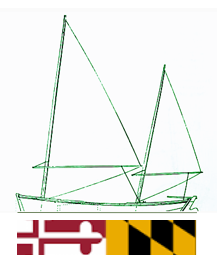
Type: Bugeye
Year: 1893
Builder: W. Lowery
Location: Tilghman
These records are found in the online catalog of The Mariners’ Museum and Park in Newport News, Virginia. Uncurated search results are presented to give researchers and interested readers an idea of whether the museum’s archives contain information about this vessel and whether it may be worthwhile to visit the museum’s catalog search page for further investigation. Uncurated results may be inaccurate or incomplete.
Search mode: Exact Name. Search phrase(s): "Pluck". Results returned: 10. Results displayed in this table: 10.
Use these buttons to send uncurated search results to your own app or text document for further research. First, check the box for any row, or click "Select All" then uncheck any rows. Then click "Show Selections". You can then copy your selections from the text box and past them into your app.
| Fetch? | Row ID | Media | Date | Vessel | Place | Related Places | Inscription/Marks | Subject | Notes | Archive Number |
|---|---|---|---|---|---|---|---|---|---|---|
| 1 | No image URL. | Marine painting–Catalogs.; Marine prints–Catalogs.; Nautical paraphernalia–Catalogs.; Ship models–Catalogs. | Single volume describing a personal collection to be sold in 2002. | LB93398 | ||||||
| 2 | No image URL. | Pluck (Minesweeper, ocean (nonmagnetic) : MSO-464). | Contains black-and-white photographs. | MS0817/01-17.265 | ||||||
| 3 | No image URL. | NOTES: Object made from a packing case with commercially-made violin pegs by a Grand Banks fisherman. LABEL COPY: Lap Psaltery The psaltery si one of the oldest members of the zither family dating back almost 5000 years. The English name derives from the Greek meaning "to pluck." (A to Z, 2010) | CL4506 | |||||||
| 4 | 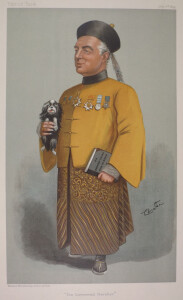 | NOTES: ADMIRAL LORD CHARLES WILLIAM DE LA POER BERESFORD, C.B., M.P. The eldest surviving son of the fourth Marquis of Waterford, who is the oldest uncle of the present Lord Waterford, has done much to brighten the name of his house ashore, at sea, and in Parliament. His social virtues are genial and breezy; his seamanship is believed in; his reckless pluck and readiness are well proven; and his Politics are strong and hearty. Now he has added another quality - that of the business man - so energetically that he is called "The Commercial Traveller." For he has been "doing" China with all the energy that is one of his attributes; and he has put his experiences in that more or less to be divided part of the world into a book that is written from the point of view not of the sailor or politician, but of the Business Man. And some people hope that good to the British Empire will result. He is a good creature. Full of blunt Irish geniality, he has made himself very well known. | CL20462 | |||||||
| 5 | 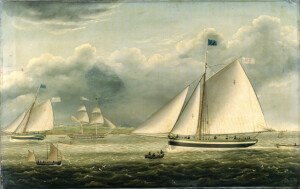 | SHORT DESCRIPTION: Oil painting by Miles Walters showing Liverpool pilot boat No. 4, the Happy Return, in two positions. Looking northwards from the Mersey River. The ship Richmond is in the background between the views of the pilot boat. The boat at the right is towing a small boat with a man seated in the stern. At the bow a crew member has thrown a rope to a small boat with four men on board. Perch Rock fort and light are visible in the background at the extreme right. The painting is signed and dated, 1830, at the lower right corner. NOTES: Sam Davidson 7/22/91, letter to Harold S Sniffen: is an unusual and most interesting variation of the Walters' ship portrait of Egremont theme. Recognizing the necessity to remain at sea under any conditions, pilot boats had extremely strong gear, as may be seen from the use of chain for the mainsail halyards, thus eliminating chafe. Built in Liverpool by Wilson & Gladstone in 1822 she served until 1849, and was 49'2" long with a beam of 15'11". With a typical draught of 8'6" she had great stability and a 'good grip of water'. Her 'punt', as it is termed locally, is being towed astern. Forward, a bow hand has thrown a rope to the occupants of the adjacent rowing boat who will take advantage of a free 'pluck' upriver. From the frequency with which she is depicted, no 4 seems to have been a favorite of the Walters. On the left of the painting in the second view, the sloop's name and number may be distinguished on the transom. In between is an outward bound brig, the name flag being not completely legible in a photograph but reading Ri… possibly Richmond. The wave structure of the water and transversely disposed light and shade might well suggest Salmon's influence. NOTES: Perch Rock Fort and light on the right. Julia Korner: A fort built between 1826 and 1829 at the entrance to the Mersey with 30 foot walls and 40 foot towers. At high tide it is cut off from the shore. It was in use until after the second world war. INVENTORY: frame - there is one (1) component part. | CL8633 | |||||||
| 6 | 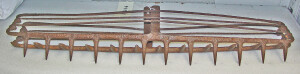 | SHORT DESCRIPTION: Metal set of oyster tongs without wooden shaft. NOTES: "Around 1700, shaft tongs, which allowed oystermen to stand in a boat and pluck the oysters from the bottom, were introduced on the Bay. The shafts and heads were originally made from wood. Later, the heads were formed from metal, but even today the shafts are made from wood in the traditional way. Early hand tongers in Virginia were either slaves, who were harvesting oyster for their masters, or a poorer class of whites who ere trying to scrape together enough to eat. However, all this changed in 1865 when the Civil War ended. The economy of the South had been devastated by the war, and many people had to turn to the river just to survive. An 1880's U.S. fish report by Richard H. Edmonds on the oyster interests of Virginia states: 'Previous to the late war the oystermen of Virginia were composed of Negroes working for their masters and of a very rough class of whites. But at the close of the war, the demand for oysters was very great and high prices were paid. Many who had been reduced from wealth to poverty were glad to avail themselves of the chance to make a support by oystering, which was at the time a very profitable employment. The four years of war, during which oysters had almost a complete rest in many parts of the stare, gave them a chance for development, and when the trade revived the beds were well stocked with large, finely-flavored oysters. Man from nearly all occupations, representing all classes of society eagerly entered the business, and soon there were hundreds of oystermen where formerly there had been but a dozen or so. Many of the most extensive farmers in the tidewater counties found that the conditions of labor had so greatly changed that to make a living it was necessary for them to devote all spare time to the oyster trade. A very noticeable fact in connection with the tonging interest of Virginia is the total absence of foreigners in the trade. Among the 8,860 tongers of Virginia (in the 1880's) there are, according to the statements of the county clerks, only about ten who are not Americans. The entire trade may be said to be virtually in the hands of native Virginians, since there are probably not 300 tongers in the whole State who were not born and raised there. The life of an ordinary tonger presents few attractions to induce strangers to enter this business. The work is very laborious, the remuneration only fair, and the injury to health from exposure is so great that few ever reach old age.' Hand tongs were made up and down the Bay and almost every waterfront community had a good supply of tongs available for sale. The local blacksmith would make the heads and a shaft maker would shape the wooden scissor-like shafts from either hickory or locust. The length of the shafts depended greatly on the rivers and creeks that the oystermen were working. There was also a short-handle tong with a small head used in shallow water that was called nipper. These were more for home use in creeks and often children were sent out with a pair of nippers to catch mess of oysters for the supper table. The long-handle tongs ranged from fourteen feet to around thirty feet in length and are still used today in Maryland and Virginia waters." (Chowning, Larry S. HARVESTING THE CHESAPEAKE: TOOLS AND TRADITIONS. Centreville, Maryland: Tidewater Publishers. p. 87-88.) LABEL COPY: Oyster Tongs The Mariners' Museum NOTES: 12 teeth (Waters of Despair, September 15, 2000; see Exhibit file for additional information) ADDITIONAL INFORMATION: See "Harvesting the Chesapeake: Tools and Traditions" by Larry S. Chowning located in the object file. | CL27781 | |||||||
| 7 | 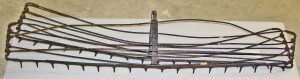 | SHORT DESCRIPTION: Metal set of oyster tongs without wooden shaft. 18 teeth. NOTES: "Around 1700, shaft tongs, which allowed oystermen to stand in a boat and pluck the oysters from the bottom, were introduced on the Bay. The shafts and heads were originally made from wood. Later, the heads were formed from metal, but even today the shafts are made from wood in the traditional way. Early hand tongers in Virginia were either slaves, who were harvesting oyster for their masters, or a poorer class of whites who ere trying to scrape together enough to eat. However, all this changed in 1865 when the Civil War ended. The economy of the South had been devastated by the war, and many people had to turn to the river just to survive. An 1880's U.S. fish report by Richard H. Edmonds on the oyster interests of Virginia states: 'Previous to the late war the oystermen of Virginia were composed of Negroes working for their masters and of a very rough class of whites. But at the close of the war, the demand for oysters was very great and high prices were paid. Many who had been reduced from wealth to poverty were glad to avail themselves of the chance to make a support by oystering, which was at the time a very profitable employment. The four years of war, during which oysters had almost a complete rest in many parts of the stare, gave them a chance for development, and when the trade revived the beds were well stocked with large, finely-flavored oysters. Man from nearly all occupations, representing all classes of society eagerly entered the business, and soon there were hundreds of oystermen where formerly there had been but a dozen or so. Many of the most extensive farmers in the tidewater counties found that the conditions of labor had so greatly changed that to make a living it was necessary for them to devote all spare time tot he oyster trade. A very noticeable fact in connection with the tonging interest of Virginia is the total absence of foreigners in the trade. Among the 8,860 tongers of Virginia (in the 1880's) there are, according to the statements of the county clerks, only about ten who are not Americans. The entire trade may be said to be virtually in the hands of native Virginians, since there are probably not 300 tongers in the whole State who were not born and raised there. The life of an ordinary tonger presents few attractions to induce strangers to enter this business. The work is very laborious, the remuneration only fair, and the injury to health from exposure is so great that few ever reach old age.' Hand tongs were made up and down the Bay and almost every waterfront community had a good supply of tongs available for sale. The local blacksmith would make the heads and a shaft maker would shape the wooden scissor-like shafts from either hickory or locust. The length of the shafts depended greatly on the rivers and creeks that the oystermen were working. There was also a short-handle tong with a small head used in shallow water that was called nipper. These were more for home use in creeks and often children were sent out with a pair of nippers to catch mess of oysters for the supper table. The long-handle tongs ranged from fourteen feet to around thirty feet in length and are still used today in Maryland and Virginia waters." (Chowning, Larry S. HARVESTING THE CHESAPEAKE: TOOLS AND TRADITIONS. Centreville, Maryland: Tidewater Publishers. p. 87-88.) | CL27782 | |||||||
| 8 | 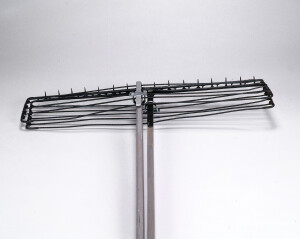  | SHORT DESCRIPTION: Metal set of oyster tongs with reproduction wooden shaft. 16 teeth. NOTES: "Around 1700, shaft tongs, which allowed oystermen to stand in a boat and pluck the oysters from the bottom, were introduced on the Bay. The shafts and heads were originally made from wood. Later, the heads were formed from metal, but even today the shafts are made from wood in the traditional way. Early hand tongers in Virginia were either slaves, who were harvesting oyster for their masters, or a poorer class of whites who were trying to scrape together enough to eat. However, all this changed in 1865 when the Civil War ended. The economy of the South had been devastated by the war, and many people had to turn to the river just to survive. An 1880's U.S. fish report by Richard H. Edmonds on the oyster interests of Virginia states: 'Previous to the late war the oystermen of Virginia were composed of Negroes working for their masters and of a very rough class of whites. But at the close of the war, the demand for oysters was very great and high prices were paid. Many who had been reduced from wealth to poverty were glad to avail themselves of the chance to make a support by oystering, which was at the time a very profitable employment. The four years of war, during which oysters had almost a complete rest in many parts of the state, gave them a chance for development, and when the trade revived the beds were well stocked with large, finely flavored oysters. Men from nearly all occupations, representing all classes of society eagerly entered the business, and soon there were hundreds of oystermen where formerly there had been but a dozen or so. Many of the most extensive farmers in the tidewater counties found that the conditions of labor had so greatly changed that to make a living it was necessary for them to devote all spare time to the oyster trade. A very noticeable fact in connection with the tonging interest of Virginia is the total absence of foreigners in the trade. Among the 8,860 tongers of Virginia (in the 1880's) there are, according to the statements of the county clerks, only about ten who are not Americans. The entire trade may be said to be virtually in the hands of native Virginians, since there are probably not 300 tongers in the whole State who were not born and raised there. The life of an ordinary tonger presents few attractions to induce strangers to enter this business. The work is very laborious, the remuneration only fair, and the injury to health from exposure is so great that few ever reach old age.' Hand tongs were made up and down the Bay and almost every waterfront community had a good supply of tongs available for sale. The local blacksmith would make the heads and a shaft maker would shape the wooden scissor-like shafts from either hickory or locust. The length of the shafts depended greatly on the rivers and creeks that the oystermen were working. There was also a short-handle tong with a small head used in shallow water that was called nipper. These were more for home use in creeks and often children were sent out with a pair of nippers to catch mess of oysters for the supper table. The long-handle tongs ranged from fourteen feet to around thirty feet in length and are still used today in Maryland and Virginia waters." (Chowning, Larry S. HARVESTING THE CHESAPEAKE: TOOLS AND TRADITIONS. Centreville, Maryland: Tidewater Publishers. p. 87-88.) | CL27783 | |||||||
| 9 | 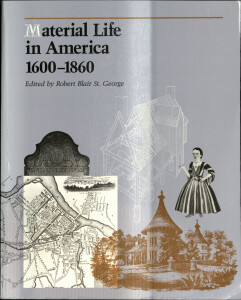 | United States–Social life and customs–To 1775.; United States–Social life and customs–1783-1865. | Material culture–United States. | Material life in America, 1600-1860 __ __edited by Robert Blair St. George | LB106782 | |||||
| 10 | 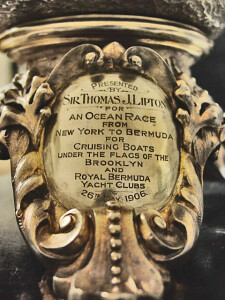 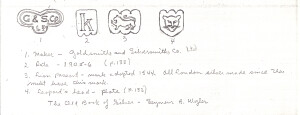 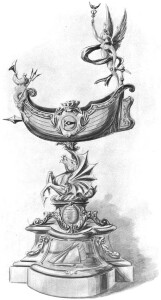 | SHORT DESCRIPTION: Presentation trophy by Goldsmiths & Silversmiths Company, London, circa 1906. With open hull with cast winged figure on stern and figure with fishtail on bow. Enamel pennants of the Brooklyn and Royal Bermuda Yacht Clubs in cast and parcel-gilt cartouches. On sea monster support over cast and parcel gilt footed stand with oval cartouch with inscription: "Presented by Sir Thomas J. Lipton for an Ocean Race from New York to Bermuda for cruising boats under the flags of the Brooklyn and Royal Bermuda Yacht Clubs, 26th May 1906". On wooden base with parcel-gilt pictorial mounts. NOTES: The trophy is related to the first race from New York to Bermuda. The guiding spirit behind it was Thomas Fleming Day, editor of The Rudder magazine. Only three boats participated with Tamerlane the winner, but the attendant publicity did a great deal to establish Bermuda as a yachting center and to create interest in ocean racing in general. Yachting magazine commented the following year that "in presenting a cup for last year's contest, Sir Thomas Lipton south to encourage ocean racing, and the coming races obviously prove that his efforts were highly successful." From: Illustrated Sporting and Dramatic News, May 26, 1906, page 504: The Ocean Race Trophy presented to the Brooklyn Yacht Club. The whole design is allegorical, the principal feature being a representation of an ancient galley, having a winged female figure at the stern, indicating Speed, one had resting upon the tiller, and the other holding a mercurial staff. At the prow there is a figure of Triton, blowing a trumpet, in the form of a shell, to herald the race. The galley is decorated with conventional waves, and has on either side an ornamental shield, one bearing the Burgee of the Brooklyn Yacht Club, and the other the Burgee of the Bermuda Yacht Club, both enamelled in proper colors. The galley is supported upon the wings of a sea-horse, resting upon an ornamental base, having four scroll feet, with two medallions introduced, one bearing the american Flag and the Union Jack entwined, and the other the inscription: "Presented by Sir Thomas J. Lipton for an ocean race from New York to Bermuda by cruising boats, under the flags of the Brooklyn and Royal Bermuda Yacht Clubs, May 26th, 1906." The lower base will be of ebonised wood, having a silver panel on each side, one containing a view of a yacht race, and the other a view of Hamilton, Bermuda, both chased in bold relief. The trophy was designed and manufactured by the Goldsmiths and Silversmiths Company, Ltd., of 112 and 110 Regent street, London, W. ADDITIONAL INFORMATION: See "The Sporting Scene, Racing to Bermuda", New Yorker, July 18, 1983, pg. 50-79. INVENTORY: Base from presentation trophy - there is one (1) component part. | CL1109 |
Created 2026 by Don Barker, CBMM volunteer, for the Chesapeake Shipbuilding Project. shipbuilding@sailingworkboats.es